Sign In Sign In

Continue with Google
or use

Forgot Password?

Don't have account, Sign Up Here

Forgot Password Forgot Password

Lost your password? Please enter your email address. You will receive a link and will create a new password via email.

Have an account? Sign In Now

Sorry, you do not have permission to ask a question, You must login to ask a question.

Continue with Google
or use

Forgot Password?

Need An Account, Sign Up Here

Please briefly explain why you feel this question should be reported.

Please briefly explain why you feel this answer should be reported.

Please briefly explain why you feel this user should be reported.

Sign InSign Up

Nuq4

Nuq4 Logo Nuq4 Logo
Search
Ask A Question

Mobile menu

Close
Ask a Question
  • Nuq4 Shop
  • Become a Member
  • Recent Questions
  • Most Answered
  • No Answers
  • Most Visited
  • Most Voted

Nuq4 Latest Questions

  • 0
Ali1234Researcher
In: Iran, Israel

Iran named its operation against Israel "Operation Sadiq Promise 3." What does that mean?

  • 0
  1. Ali1234 Researcher
    Added an answer on June 13, 2025 at 1:35 pm

    "Operation Sadiq Promise 3" (also referred to as "True Promise 3") is the name given by Iran to its most recent large-scale military operation against Israel. This operation, reportedly involving hundreds of drones and missiles, is a direct response to Israeli military actions, particularly those taRead more

    “Operation Sadiq Promise 3” (also referred to as “True Promise 3”) is the name given by Iran to its most recent large-scale military operation against Israel. This operation, reportedly involving hundreds of drones and missiles, is a direct response to Israeli military actions, particularly those targeting Iranian nuclear and military facilities, and previously, its consulate in Damascus.
    Here’s a breakdown of what the “Sadiq Promise” (or “True Promise”) series of operations signifies:
    * “Sadiq Promise” (Vade-ye Sadegh – وعده صادق in Persian): This name, which translates to “True Promise” or “Honest Promise,” implies that Iran views these operations as fulfilling a pledge or commitment to retaliate against Israeli aggression. It signifies a declared strategy of direct military response from Iran.
    * The “3” indicates a sequence:
    * Operation Sadiq Promise (or True Promise) 1 (April 2024): This was the first direct, large-scale drone and missile attack by Iran against Israel. It was a retaliation for an Israeli airstrike on Iran’s consulate in Damascus, which killed several Iranian military officials.
    * Operation Sadiq Promise (or True Promise) 2 (October 2024): This operation involved a missile strike by Iran targeting Israeli military facilities. While it caused minor damage, it demonstrated Iran’s continued capability and willingness to strike directly.
    * Operation Sadiq Promise (or True Promise) 3 (June 2025): This is the latest iteration, reported to be a significant escalation involving a large number of drones and missiles, in response to Israel’s “Operation Rising Lion” which targeted Iranian sites.
    In essence, “Operation Sadiq Promise 3” means that Iran is executing the third phase of its vowed direct military retaliation against Israel, aiming to demonstrate its resolve and capability to respond to perceived Israeli aggression.

    See less
    • 0
    • Share
      Share
      • Share onFacebook
      • Share on Twitter
      • Share on LinkedIn
      • Share on WhatsApp
  • 1 Answer
Answer
  • 0
Ali1234Researcher
In: Iran

Why is Iran fighting?

  • 0
  • 0 Answers
Answer
  • 0
Ali1234Researcher
In: India, oil, Russia, Ukraine

Ukraine crisis: Why is India buying more oil from Russia?

  • 0
  1. Ali1234 Researcher
    Added an answer on July 21, 2025 at 1:39 am

    India's increased purchase of oil from Russia since the Ukraine crisis began is a complex issue driven by a combination of economic, energy security, and foreign policy considerations. It's not a simple alignment with Russia, but rather a strategic balancing act. Here are the key reasons: Deep DiscoRead more

    India’s increased purchase of oil from Russia since the Ukraine crisis began is a complex issue driven by a combination of economic, energy security, and foreign policy considerations. It’s not a simple alignment with Russia, but rather a strategic balancing act.

    Here are the key reasons:

    1. Deep Discounts and Economic Advantage:
      • Following Western sanctions and the withdrawal of many traditional buyers, Russia was forced to offer significant discounts on its crude oil.
      • India, as the world’s third-largest oil importer and consumer, saw an opportunity to secure cheaper energy supplies, which is crucial for managing inflation and maintaining economic stability for its large population.
      • Even with Western price caps (like the $60 per barrel G7 cap), Russia often finds ways to offer competitive rates, for example, by including transport and insurance costs, or by using a “shadow fleet” of tankers.
    2. Energy Security and Diversification:
      • India is heavily dependent on oil imports (over 85% of its crude oil needs). Its energy security strategy involves diversifying its sources of supply to reduce reliance on any single region or supplier.
      • Historically, India relied heavily on the Middle East. However, geopolitical tensions in the Middle East, particularly around the Strait of Hormuz (a critical chokepoint for a significant portion of global oil movement), have pushed India to seek alternative, more secure routes. Russian oil, often accessed through eastern routes (like the Eastern Maritime Corridor to Vladivostok), provides a valuable diversification against potential disruptions in the Middle East.
      • India has expanded its crude import sources from around 27 countries to about 40, reflecting this drive for diversification.
    3. “Strategic Autonomy” in Foreign Policy:
      • India has a long-standing foreign policy principle of “strategic autonomy,” meaning it prioritizes its national interests and avoids being drawn into blocs or taking sides in major global conflicts.
      • This approach allows India to maintain its historic, strategic partnership with Russia (especially in defense, where Russia remains a key arms supplier), while also deepening ties with Western nations like the US and Europe.
      • India has largely maintained a neutral stance on the Ukraine war, abstaining from most UN resolutions condemning Russia. It has consistently emphasized dialogue and diplomacy as the way forward.
      • Indian officials have openly stated that their primary responsibility is to secure affordable energy for their 1.4 billion people and that oil purchases are a legitimate aspect of their energy security.
    4. Established Infrastructure and Refining Capacity:
      • Indian refineries, especially private sector ones like Reliance Industries and Nayara Energy, are well-equipped to process various types of crude, including the Urals crude often supplied by Russia. They have adapted their refining and payment systems to handle Russian oil.

    Western Reactions and India’s Response:

    While Western nations, particularly the US and EU, have expressed concerns and even threatened secondary sanctions or tariffs on countries buying Russian oil, India has largely remained firm.

    • India’s Oil Minister, Hardeep Singh Puri, has repeatedly stated that India is not worried about such threats and is prepared to deal with any disruptions by further diversifying supplies from other emerging or established producers (like Brazil, Guyana, Canada, and traditional Middle Eastern sources if needed).
    • Recent EU sanctions specifically targeting refined petroleum products made from Russian crude in third countries like India could impact India’s $15 billion fuel exports to Europe. This forces India to walk a fine line between securing discounted crude and maintaining access to lucrative export markets.

    In essence, India’s increased oil imports from Russia are a pragmatic decision driven by its fundamental energy needs and a foreign policy that prioritizes national interests and strategic flexibility in a complex global environment.

    See less
    • 0
    • Share
      Share
      • Share onFacebook
      • Share on Twitter
      • Share on LinkedIn
      • Share on WhatsApp
  • 1 Answer
Answer
  • 0
Salman
In: Australia

how to make money online australia

  • 0
  • 0 Answers
Answer
  • 0
Zoe
In: make money, Malaysia

how to make money online malaysia

  • 0
  • 0 Answers
Answer
  • 0
Ali1234Researcher
In: Ukraine

NATO Summit: Will Ukraine be ignored?

  • 0
  • 0 Answers
Answer
  • 0
Ali1234Researcher
In: Iran, Israel

Third day of Iran-Israel tensions, what do we know about it so far?

  • 0
  1. Ali1234 Researcher
    Added an answer on June 15, 2025 at 6:38 am

    As of Sunday, June 15, 2025, the tensions between Iran and Israel have escalated significantly, marking the third day of overt conflict. Here's a summary of what we know: Initiation of Conflict: * Friday, June 13, 2025: Israel launched major airstrikes on Iran, codenamed "Operation Rising Lion." TheRead more

    As of Sunday, June 15, 2025, the tensions between Iran and Israel have escalated significantly, marking the third day of overt conflict. Here’s a summary of what we know:
    Initiation of Conflict:
    * Friday, June 13, 2025: Israel launched major airstrikes on Iran, codenamed “Operation Rising Lion.” These attacks targeted Iran’s nuclear facilities, military installations, and reportedly killed several top Iranian military leaders and nuclear scientists, including IRGC commander Hossein Salami and Major General Mohammad Bagheri. Explosions were reported in Tehran and near nuclear sites like Natanz and Esfahan. Israel stated its aim was to “degrade, destroy, and remove the threat” of Iran’s nuclear weapons program.
    * Friday, June 13, 2025 (Evening): Iran quickly retaliated with a large-scale attack on Israel, launching over 150 ballistic missiles and more than 100 drones, codenamed “Operation True Promise III.”
    Escalation and Continued Strikes:
    * Saturday, June 14, 2025: Both sides continued their strikes. Israel expanded its targets to include Iran’s energy industry, while Iranian missile and drone attacks on Israel continued, reportedly hitting cities like Haifa and Tel Aviv.
    * Sunday, June 15, 2025: The exchange of strikes has continued for a third day. Israel has unleashed further airstrikes across Iran, threatening greater force. Some Iranian missiles have reportedly evaded Israeli air defenses and struck buildings in central Israel. Iran’s Revolutionary Guard Corps (IRGC) claimed to have targeted Israel’s fuel infrastructure in response to Israeli strikes on its oil facilities.
    Casualties and Damages:
    * Iran: Iranian media has reported significant casualties, with unofficial tolls on Saturday stating 78 people killed and 329 injured in Tehran alone. Al Jazeera reports at least 80 people killed and 800 wounded across Iran over the past two days, including 20 children and nine nuclear scientists. Israeli strikes have caused fires at oil storage facilities in Tehran and other areas.
    * Israel: Iran’s retaliatory strikes have also caused casualties. Israel’s Magen David Adom rescue service reported at least 10 people killed overnight and into Sunday, bringing Israel’s total death toll to 13. Reports indicate strikes hitting residential areas, with one attack in Bat Yam (a Tel Aviv suburb) killing at least six people, including two children, and wounding 180.
    International Reaction:
    * The United Nations Security Council held a meeting on Friday, June 13, to discuss the rising tensions.
    * Calls for de-escalation are mounting from world leaders.
    * The conflict has closed Israel’s main international airport and airspace for a third day.
    Context and Broader Implications:
    * This direct military confrontation marks a significant escalation in the long-standing “shadow war” between Israel and Iran, which previously involved proxy conflicts, cyberattacks, and targeted assassinations.
    * The immediate catalyst was Israel’s initial strikes, which it justified by claiming Iran was close to developing a nuclear weapon, a day after the UN nuclear watchdog declared Iran wasn’t complying with nonproliferation agreements. Iran responded by stating it would create a new uranium enrichment facility.
    * Experts are concerned about the potential for this conflict to escalate into a wider regional war, with implications for global energy markets.
    * There are reports of discussions regarding regime change as a potential Israeli goal.

    See less
    • 0
    • Share
      Share
      • Share onFacebook
      • Share on Twitter
      • Share on LinkedIn
      • Share on WhatsApp
  • 1 Answer
Answer
  • 0
Ali1234Researcher
In: India, Pakistan

Despite its efforts, why was India unable to stop the IMF from releasing a loan tranche for Pakistan?

  • 0
  1. Ali1234 Researcher
    Added an answer on July 8, 2025 at 8:00 am

    India has consistently raised strong objections to the International Monetary Fund (IMF) releasing loan tranches to Pakistan, primarily due to concerns that these funds could be misused to finance cross-border terrorism and Pakistan's poor track record of adhering to IMF program conditions. However,Read more

    India has consistently raised strong objections to the International Monetary Fund (IMF) releasing loan tranches to Pakistan, primarily due to concerns that these funds could be misused to finance cross-border terrorism and Pakistan’s poor track record of adhering to IMF program conditions. However, despite these efforts, India has been largely unsuccessful in stopping the loans for several key reasons:
    * IMF’s Decision-Making Structure: The IMF’s executive board, which approves loans, operates on a system of weighted voting based on a country’s economic size. While India is a significant member, it does not possess a veto power like in the UN Security Council. Furthermore, IMF rules typically do not allow for a formal “no” vote. Instead, members can either vote in favor or abstain. India has chosen to abstain in such votes, which formally registers its dissent and objections, but it cannot outright block a loan if other major members support it.
    * Focus on Economic Stability: The IMF’s primary mandate is to ensure global financial stability. When a member country like Pakistan faces severe balance of payments issues, the IMF views providing financial assistance as crucial to preventing a wider economic collapse, which could have regional and even global repercussions. The IMF’s justification for the loans often centers on Pakistan meeting its technical targets and making progress on reforms, as assessed by its staff.
    * “Too Big to Fail” Borrower: India has highlighted that Pakistan’s prolonged borrowing from the IMF has created a “too big to fail” situation. This means that Pakistan’s debt burden is so high that allowing it to default could destabilize the global financial system, making the IMF more inclined to continue providing assistance to prevent such an outcome.
    * Political vs. Procedural Considerations: While India’s concerns about the misuse of funds for terrorism are taken note of by the IMF, the institution’s decisions are largely governed by procedural and technical formalities related to economic stability and a country’s adherence to program conditions. The IMF attempts to maintain neutrality on political matters, focusing on the economic health of its member states.
    * Lack of Broad International Support for a Blockade: While some member countries might share India’s concerns about Pakistan’s track record, there hasn’t been a strong enough consensus among major IMF shareholders to outright block loans to Pakistan. Many countries prioritize regional stability and a functioning Pakistani economy over India’s specific security concerns within the IMF’s framework.
    * Pakistan’s Efforts to Meet Conditions: Pakistan, despite its challenges, often makes efforts to meet the technical conditions set by the IMF for loan disbursements, which helps it secure the tranches.
    In essence, while India has effectively used its position to voice strong objections and raise awareness about its concerns regarding Pakistan’s use of funds and its track record, the institutional framework and mandate of the IMF, coupled with the complex geopolitical dynamics, make it very difficult for any single country, even a significant one like India, to unilaterally stop a loan to another member nation.

    See less
    • 0
    • Share
      Share
      • Share onFacebook
      • Share on Twitter
      • Share on LinkedIn
      • Share on WhatsApp
  • 1 Answer
Answer
  • 0
Ali1234Researcher
In: India

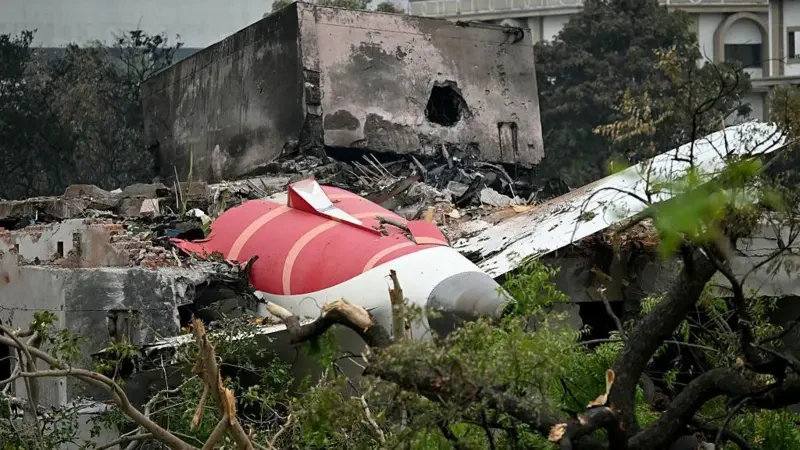
Air India plane crash: ‘Boeing’s fuel control switches are safe to use,’ FAA says

  • 0
  1. Ali1234 Researcher
    Added an answer on July 23, 2025 at 11:51 pm

    Following the Air India Flight 171 crash on June 12, 2025, the U.S. Federal Aviation Administration (FAA) and Boeing have privately affirmed the safety of fuel cutoff switch locks on Boeing aircraft. This comes amidst an ongoing investigation into the crash, which a preliminary report indicated wasRead more

    Following the Air India Flight 171 crash on June 12, 2025, the U.S. Federal Aviation Administration (FAA) and Boeing have privately affirmed the safety of fuel cutoff switch locks on Boeing aircraft. This comes amidst an ongoing investigation into the crash, which a preliminary report indicated was caused by both engine fuel switches flipping to “cutoff” shortly after takeoff.

    While India’s Aircraft Accident Investigation Bureau (AAIB) preliminary report referenced a 2018 FAA advisory about potential disengagement of the fuel control switch locking mechanism, the FAA has stated that it does not consider this issue an “unsafe condition” requiring an airworthiness directive. Boeing has also reiterated the FAA’s stance in messages to airlines, and has not recommended any additional action in response to the incident.

    Despite the FAA’s position, India’s Directorate General of Civil Aviation (DGCA) ordered airlines operating Boeing 787 Dreamliners and select Boeing 737 variants to inspect fuel control switches. Air India has since completed these precautionary inspections on all its Boeing 787 and 737 aircraft, including those of Air India Express, and reported finding no issues with the locking mechanisms.

    The investigation into the Air India Flight 171 crash is ongoing, with the AAIB’s preliminary report outlining initial findings but not assigning blame. Cockpit voice recordings reportedly captured a moment of confusion between the pilots, with one asking the other why the fuel was cut off, and the other denying having done so. This has led to speculation about pilot error, though pilot associations and the NTSB have cautioned against premature conclusions, emphasizing that full investigations take time to determine root causes. 

    See less
    • 0
    • Share
      Share
      • Share onFacebook
      • Share on Twitter
      • Share on LinkedIn
      • Share on WhatsApp
  • 1 Answer
Answer
  • 0
Maya
In: Dubai, make money

how to make money online in dubai without investment

  • 0
  • 0 Answers
Answer

Sidebar

[the_ad_group id="2732"]

[the_ad id="17089"]

Explore

  • Nuq4 Shop
  • Become a Member

Footer

Get answers to all your questions, big or small, on Nuq4.com. Our database is constantly growing, so you can always find the information you need.

Download Android App

© Copyright 2024, Nuq4.com

Legal

Terms and Conditions
Privacy Policy
Cookie Policy
DMCA Policy
Payment Rules
Refund Policy
Nuq4 Giveaway Terms and Conditions

Contact

Contact Us
Chat on Telegram
We use cookies to ensure that we give you the best experience on our website. If you continue to use this site we will assume that you are happy with it.