


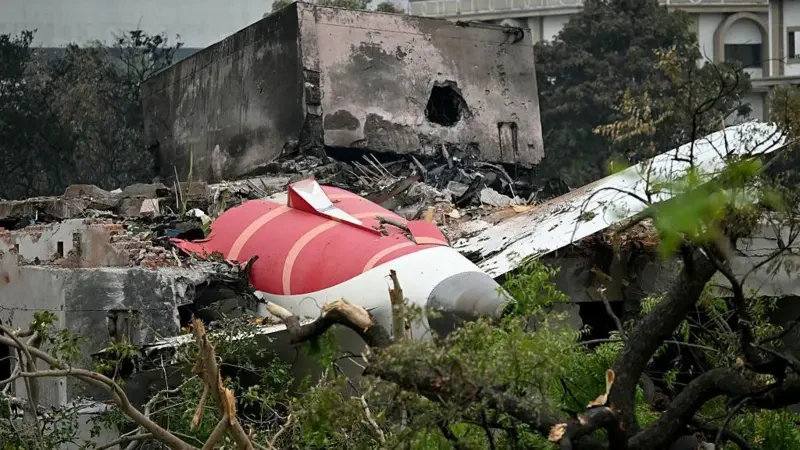
Following the Air India Flight 171 crash on June 12, 2025, the U.S. Federal Aviation Administration (FAA) and Boeing have privately affirmed the safety of fuel cutoff switch locks on Boeing aircraft. This comes amidst an ongoing investigation into the crash, which a preliminary report indicated wasRead more
Following the Air India Flight 171 crash on June 12, 2025, the U.S. Federal Aviation Administration (FAA) and Boeing have privately affirmed the safety of fuel cutoff switch locks on Boeing aircraft. This comes amidst an ongoing investigation into the crash, which a preliminary report indicated was caused by both engine fuel switches flipping to “cutoff” shortly after takeoff.
While India’s Aircraft Accident Investigation Bureau (AAIB) preliminary report referenced a 2018 FAA advisory about potential disengagement of the fuel control switch locking mechanism, the FAA has stated that it does not consider this issue an “unsafe condition” requiring an airworthiness directive. Boeing has also reiterated the FAA’s stance in messages to airlines, and has not recommended any additional action in response to the incident.
Despite the FAA’s position, India’s Directorate General of Civil Aviation (DGCA) ordered airlines operating Boeing 787 Dreamliners and select Boeing 737 variants to inspect fuel control switches. Air India has since completed these precautionary inspections on all its Boeing 787 and 737 aircraft, including those of Air India Express, and reported finding no issues with the locking mechanisms.
The investigation into the Air India Flight 171 crash is ongoing, with the AAIB’s preliminary report outlining initial findings but not assigning blame. Cockpit voice recordings reportedly captured a moment of confusion between the pilots, with one asking the other why the fuel was cut off, and the other denying having done so. This has led to speculation about pilot error, though pilot associations and the NTSB have cautioned against premature conclusions, emphasizing that full investigations take time to determine root causes. 


Pakistan's T20 series loss to Bangladesh has certainly put Faheem Ashraf's performance under scrutiny, especially in the context of the second T20I. Here's what Faheem Ashraf "did" in the context of Pakistan's series loss: Second T20I (Series Decider for Bangladesh): Batting Heroics (in vain): ThisRead more
Pakistan’s T20 series loss to Bangladesh has certainly put Faheem Ashraf’s performance under scrutiny, especially in the context of the second T20I.
Here’s what Faheem Ashraf “did” in the context of Pakistan’s series loss:
Second T20I (Series Decider for Bangladesh):
First T20I:
Overall Impact on the Series:
While Faheem Ashraf played a brilliant, fighting innings in the second T20I that almost pulled off an impossible win, the larger narrative is that Pakistan’s top-order batting failed consistently across both matches. In the first T20I, Pakistan was bowled out for 110, which Bangladesh chased down easily. In the second, despite Faheem’s efforts, the early collapse was too significant to overcome.
Therefore, the question “Faheem Ashraf, what did he do?” likely comes from a place of frustration over the overall team performance, even though Faheem Ashraf himself provided a glimmer of hope with his batting in the second match. His individual performance in the second game was outstanding, but it wasn’t enough to compensate for the widespread batting failures that led to Bangladesh securing their first-ever T20I series win against Pakistan.
See less