Sign In Sign In

Continue with Google
or use

Forgot Password?

Don't have account, Sign Up Here

Forgot Password Forgot Password

Lost your password? Please enter your email address. You will receive a link and will create a new password via email.

Have an account? Sign In Now

Sorry, you do not have permission to ask a question, You must login to ask a question.

Continue with Google
or use

Forgot Password?

Need An Account, Sign Up Here

Please briefly explain why you feel this question should be reported.

Please briefly explain why you feel this answer should be reported.

Please briefly explain why you feel this user should be reported.

Sign InSign Up

Nuq4

Nuq4 Logo Nuq4 Logo
Search
Ask A Question

Mobile menu

Close
Ask a Question
  • Nuq4 Shop
  • Become a Member

Geography

Share
  • Facebook
0 Followers
3 Answers
208 Questions
  • Recent Questions
  • Most Answered
  • No Answers
  • Most Visited
  • Most Voted

Nuq4 Latest Questions

  • 0
Ali1234Researcher
In: India, IPL, Match

india How did the lights go off in an IPL match?

  • 0
  1. Ali1234 Researcher
    Added an answer on June 15, 2025 at 2:02 am

    There can be several reasons why lights might go out during an IPL match in India. Recently, one prominent reason has been security concerns related to military tensions. Here's a breakdown of possible causes: Security Concerns and Military Tensions: In recent times, especially during the IPL 2025 sRead more

    There can be several reasons why lights might go out during an IPL match in India. Recently, one prominent reason has been security concerns related to military tensions.

    Here’s a breakdown of possible causes:

    • Security Concerns and Military Tensions: In recent times, especially during the IPL 2025 season, a match between Punjab Kings and Delhi Capitals in Dharamsala was called off due to a power outage. While initially thought to be a floodlight malfunction, it was later confirmed to be part of a wider blackout due to heightened security concerns and air raid alerts in areas near the India-Pakistan border. This led to the evacuation of players and spectators for their safety. There were even claims by Pakistan’s Defence Minister of their “cyber warriors” hacking floodlight systems, though this claim has been met with skepticism. Such situations highlight how geopolitical tensions can directly impact events like the IPL.

    • Technical Malfunctions: This is a common cause for power outages in any large venue. It could be due to:

      • Floodlight failure: A specific issue with the stadium’s floodlight system, such as a circuit overload or equipment malfunction.
      • Generator issues: Most stadiums have backup generators, but if there’s a problem with their operation or fuel supply, it can lead to a blackout.
      • DRS (Decision Review System) issues: Sometimes, a power glitch might specifically affect the DRS system, making it unavailable for a few overs, even if the main lights are on.
    • Adverse Weather Conditions: Severe weather events like heavy rains or strong winds can disrupt power supply to the stadium, leading to temporary blackouts or even match delays/cancellations.

    • Local Power Grid Problems: While stadiums often have their own power arrangements, they can still be affected by issues with the broader local electricity grid, leading to a general power outage in the area that extends to the stadium.

    In the specific case of the Dharamsala match in IPL 2025, the power outage was a direct consequence of security measures taken in response to escalating cross-border tensions, leading to a wider blackout in the region.

    See less
    • 0
    • Share
      Share
      • Share onFacebook
      • Share on Twitter
      • Share on LinkedIn
      • Share on WhatsApp
  • 1 Answer
Answer
  • 0
Ali1234Researcher
In: Bangladesh, Cricket Pakistan, Pakistan, T20

Pakistan loses T20 series against Bangladesh: 'Faheem Ashraf, what did he do?'

  • 0
  1. Ali1234 Researcher
    Added an answer on July 22, 2025 at 11:23 pm

    Pakistan's T20 series loss to Bangladesh has certainly put Faheem Ashraf's performance under scrutiny, especially in the context of the second T20I. Here's what Faheem Ashraf "did" in the context of Pakistan's series loss: Second T20I (Series Decider for Bangladesh): Batting Heroics (in vain): ThisRead more

    Pakistan’s T20 series loss to Bangladesh has certainly put Faheem Ashraf’s performance under scrutiny, especially in the context of the second T20I.

    Here’s what Faheem Ashraf “did” in the context of Pakistan’s series loss:

    Second T20I (Series Decider for Bangladesh):

    • Batting Heroics (in vain): This is where Faheem Ashraf truly stood out, though ultimately on the losing side. Pakistan’s top order crumbled, leaving them in a dire situation at 15 for 5 within the first five overs, and later 47 for 7. Faheem Ashraf then launched a remarkable counterattack, smashing an aggressive 51 runs off just 32 balls, including four fours and four sixes. He formed crucial partnerships with Abbas Afridi (41 runs for the 8th wicket) and Ahmed Daniyal (33 runs for the 9th wicket), almost taking Pakistan to an improbable victory. He was dismissed in the penultimate over, leaving Pakistan needing 13 runs off the last over, which they couldn’t achieve. His innings was widely praised as a heroic effort given the circumstances.
    • Bowling: In the second T20I, Faheem Ashraf bowled 3 overs, conceding 20 runs and taking 1 wicket. He dismissed Bangladesh opener Mohammad Naim.

    First T20I:

    • Batting: In the first match, Pakistan was bundled out for a mere 110 runs. Faheem Ashraf’s batting was not a significant factor in this game, as the entire team struggled.
    • Bowling: In the first T20I, Faheem Ashraf bowled 3 overs for 29 runs with no wickets.

    Overall Impact on the Series:

    While Faheem Ashraf played a brilliant, fighting innings in the second T20I that almost pulled off an impossible win, the larger narrative is that Pakistan’s top-order batting failed consistently across both matches. In the first T20I, Pakistan was bowled out for 110, which Bangladesh chased down easily. In the second, despite Faheem’s efforts, the early collapse was too significant to overcome.

    Therefore, the question “Faheem Ashraf, what did he do?” likely comes from a place of frustration over the overall team performance, even though Faheem Ashraf himself provided a glimmer of hope with his batting in the second match. His individual performance in the second game was outstanding, but it wasn’t enough to compensate for the widespread batting failures that led to Bangladesh securing their first-ever T20I series win against Pakistan.

    See less
    • 0
    • Share
      Share
      • Share onFacebook
      • Share on Twitter
      • Share on LinkedIn
      • Share on WhatsApp
  • 1 Answer
Answer
  • 0
Ali1234Researcher
In: Iran, War

Iran-US war restarted?

  • 0
  • 0 Answers
Answer
  • 0
Ali1234Researcher
In: India

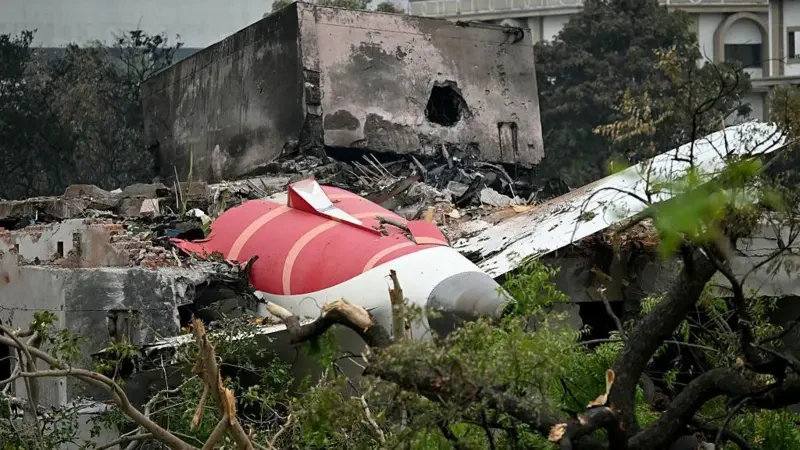
Air India plane crash: ‘Boeing’s fuel control switches are safe to use,’ FAA says

  • 0
  1. Ali1234 Researcher
    Added an answer on July 23, 2025 at 11:51 pm

    Following the Air India Flight 171 crash on June 12, 2025, the U.S. Federal Aviation Administration (FAA) and Boeing have privately affirmed the safety of fuel cutoff switch locks on Boeing aircraft. This comes amidst an ongoing investigation into the crash, which a preliminary report indicated wasRead more

    Following the Air India Flight 171 crash on June 12, 2025, the U.S. Federal Aviation Administration (FAA) and Boeing have privately affirmed the safety of fuel cutoff switch locks on Boeing aircraft. This comes amidst an ongoing investigation into the crash, which a preliminary report indicated was caused by both engine fuel switches flipping to “cutoff” shortly after takeoff.

    While India’s Aircraft Accident Investigation Bureau (AAIB) preliminary report referenced a 2018 FAA advisory about potential disengagement of the fuel control switch locking mechanism, the FAA has stated that it does not consider this issue an “unsafe condition” requiring an airworthiness directive. Boeing has also reiterated the FAA’s stance in messages to airlines, and has not recommended any additional action in response to the incident.

    Despite the FAA’s position, India’s Directorate General of Civil Aviation (DGCA) ordered airlines operating Boeing 787 Dreamliners and select Boeing 737 variants to inspect fuel control switches. Air India has since completed these precautionary inspections on all its Boeing 787 and 737 aircraft, including those of Air India Express, and reported finding no issues with the locking mechanisms.

    The investigation into the Air India Flight 171 crash is ongoing, with the AAIB’s preliminary report outlining initial findings but not assigning blame. Cockpit voice recordings reportedly captured a moment of confusion between the pilots, with one asking the other why the fuel was cut off, and the other denying having done so. This has led to speculation about pilot error, though pilot associations and the NTSB have cautioned against premature conclusions, emphasizing that full investigations take time to determine root causes. 

    See less
    • 0
    • Share
      Share
      • Share onFacebook
      • Share on Twitter
      • Share on LinkedIn
      • Share on WhatsApp
  • 1 Answer
Answer
  • 0
Ali1234Researcher
In: oil, Russia

How much oil does Russia export?

  • 0
  1. Ali1234 Researcher
    Added an answer on July 21, 2025 at 1:45 am

    Russia is a major global oil exporter, but the exact figures for its exports fluctuate due to various factors, including sanctions, market demand, and production levels. Based on recent reports (as of June/July 2025): Crude Oil Exports: Russia exports approximately 4.5-5.0 million barrels per day (mRead more

    Russia is a major global oil exporter, but the exact figures for its exports fluctuate due to various factors, including sanctions, market demand, and production levels.

    Based on recent reports (as of June/July 2025):

    • Crude Oil Exports: Russia exports approximately 4.5-5.0 million barrels per day (mbd) of crude oil. This constitutes about 5% of global consumption.
    • Processed Petroleum Products: Additionally, Russia supplies roughly 2 million barrels per day (mbd) of processed petroleum products (like diesel, fuel oil, etc.) to international markets.
    • Total Oil Exports: Combining crude and refined products, Russia’s total oil exports are generally in the range of 6.5-7.0 million barrels per day.

    Key trends and destinations:

    • Shift to Asia: Due to sanctions from Western countries, Russia has significantly reoriented its oil exports towards Asian markets, particularly China and India.
      • China has purchased around 47% of Russia’s crude exports.
      • India has purchased about 38% of Russia’s crude exports.
    • Reduced Exports to EU: The EU’s import bans on seaborne Russian oil have drastically reduced direct exports to Europe, though some pipeline oil still flows to certain EU countries under exemptions. The EU’s share of Russian crude exports is currently around 6%.
    • “Shadow Fleet”: A significant portion of Russian oil is transported by a “shadow fleet” of tankers operating outside of Western sanctions regimes to circumvent price caps and other restrictions. However, recent EU sanctions are increasingly targeting these vessels.
    • Dynamic Market: Export volumes and revenues are subject to change based on global oil prices, the effectiveness of sanctions, and Russia’s ability to maintain production and find new buyers.

    It’s important to note that these figures are estimates and can vary depending on the source and the reporting period. The situation is constantly evolving due to geopolitical factors and the ongoing impact of sanction

     
    See less
    • 0
    • Share
      Share
      • Share onFacebook
      • Share on Twitter
      • Share on LinkedIn
      • Share on WhatsApp
  • 1 Answer
Answer
  • 0
Ali1234Researcher
In: China, India

How could China's new dam affect India?

  • 0
  1. Ali1234 Researcher
    Added an answer on July 21, 2025 at 1:25 am

    China's new mega-dam project on the Brahmaputra River (Yarlung Zangbo in Tibet) could significantly affect India in several ways, raising concerns about water security, environmental impact, and geopolitical stability. Here's a breakdown: 1. Water Flow Alteration and Water Security: Reduced Water AvRead more

    China’s new mega-dam project on the Brahmaputra River (Yarlung Zangbo in Tibet) could significantly affect India in several ways, raising concerns about water security, environmental impact, and geopolitical stability. Here’s a breakdown:

    1. Water Flow Alteration and Water Security:

    • Reduced Water Availability (Dry Season): While China insists the dam won’t harm downstream countries, India fears that the dam’s operation to meet China’s electricity needs could alter the natural seasonal flow. This could lead to reduced water flow in the Brahmaputra during the dry season, impacting agricultural irrigation, drinking water supply, and river navigation in India’s northeastern states like Arunachal Pradesh and Assam, and subsequently Bangladesh.
    • Increased Flood Risk (Monsoon Season): Conversely, sudden releases of large volumes of water from the dam during the monsoon season could exacerbate flooding in already flood-prone regions of India and Bangladesh. This could devastate crops, displace populations, and cause significant infrastructure damage.
    • Impact on Hydropower Projects: India has its own plans for hydropower projects on the Brahmaputra and its tributaries. Unpredictable water flow from China’s upstream dams could affect the viability and output of these Indian projects.

    2. Environmental and Ecological Impacts:

    • Sedimentation: Rivers like the Brahmaputra carry vast amounts of nutrient-rich sediment that are crucial for maintaining the fertility of downstream floodplains and deltas. Dams trap this sediment, potentially leading to a reduction in soil fertility, impacting agriculture, and increasing coastal erosion in the delta region.
    • Biodiversity Loss: Altered water flow, temperature, and sediment loads can disrupt aquatic ecosystems, affecting fish migration, spawning patterns, and overall biodiversity. This could impact species like the Gangetic dolphin and other unique flora and fauna dependent on the Brahmaputra’s natural flow.
    • Ecological Fragility of the Himalayan Region: The dam is located in a seismically active zone of the Himalayas. Large-scale infrastructure projects in such sensitive areas raise concerns about potential environmental disasters, including dam failure due to earthquakes, which could lead to catastrophic flooding downstream.
    • Water Quality: Stagnant water in reservoirs can lead to changes in water temperature and oxygen levels, potentially affecting water quality and promoting the growth of algae blooms or accumulation of pollutants.

    3. Geopolitical and Strategic Implications:

    • Lack of Water-Sharing Treaty: A major point of contention is the absence of a comprehensive, binding water-sharing treaty between China and India regarding the Brahmaputra. This lack of a formal agreement fuels mistrust and makes India vulnerable to unilateral decisions by China.
    • Strategic Leverage: India fears that China, as the upstream country, could use its control over the Brahmaputra’s water as a strategic tool or “water weapon” during periods of heightened tension or conflict, potentially causing artificial droughts or floods in Indian border regions. The 2017 Doklam standoff, when China reportedly withheld hydrological data, highlighted this concern.
    • Increased Tensions and Mistrust: The dam project, especially given its scale and location near a disputed border (Arunachal Pradesh), further escalates existing geopolitical tensions between India and China.
    • Impact on India-Bangladesh Relations: If India’s water security is affected, it could put a strain on its relations with Bangladesh, another downstream nation heavily dependent on the Brahmaputra’s waters. Bangladesh may look to China, potentially creating a new dynamic in regional alliances.

    India’s Response:

    India has consistently urged China to ensure that the interests of downstream states are not harmed. It is closely monitoring the project and has indicated it will take necessary measures to protect its interests. This includes:

    • Diplomatic Engagement: India continues to engage with China through existing mechanisms, like the Expert Level Mechanism (ELM), to emphasize the need for transparency and data sharing.
    • Developing its own Projects: India is also considering and developing its own hydropower projects on the Brahmaputra, such as the Siang Upper Multipurpose Project, partly as a “defense mechanism” to regulate water flow within its territory and ensure water security.
    • Raising Awareness: Indian politicians and experts are vocally highlighting the potential risks to create international awareness and pressure on China for responsible transboundary river management.

    While China asserts the dam will not have negative impacts, India’s concerns stem from the immense potential for disruption, the strategic implications of China’s upstream position, and the lack of a transparent, legally binding framework for water sharing.

    See less
    • 0
    • Share
      Share
      • Share onFacebook
      • Share on Twitter
      • Share on LinkedIn
      • Share on WhatsApp
  • 1 Answer
Answer
  • 0
Ali1234Researcher
In: Israel

How many millions of dollars is Israel having to spend to stop Iranian missile attacks?

  • 0
  1. Ali1234 Researcher
    Added an answer on June 17, 2025 at 6:18 am

    It's difficult to provide an exact figure for how many millions of dollars Israel is currently spending to stop Iranian missile attacks, as these costs are ongoing and fluctuate based on the intensity of attacks and defensive operations. However, here's what we know about the costs involved: * HighRead more

    It’s difficult to provide an exact figure for how many millions of dollars Israel is currently spending to stop Iranian missile attacks, as these costs are ongoing and fluctuate based on the intensity of attacks and defensive operations. However, here’s what we know about the costs involved:
    * High Cost of Interceptors: Israel’s multi-layered air defense system (Iron Dome, David’s Sling, Arrow) relies on expensive interceptor missiles.
    * Iron Dome: Each interceptor missile costs approximately $50,000.
    * David’s Sling and Arrow: These systems, designed for medium and long-range missiles, have interceptors that can cost over $2 million each, with some estimates for Arrow interceptors going up to $3.5 million.
    * Significant Costs for Barrages: When Iran launches large barrages of missiles and drones, the defensive costs can be substantial. For example, some reports indicate that Israel spent over $1 billion in a single night to defend against a major Iranian attack in April 2024. Other estimates for specific Iranian attacks put Israel’s defense costs in the range of $360 million to $630 million.
    * Ongoing Development and Maintenance: Beyond intercepting attacks, Israel also spends billions of dollars annually on developing, maintaining, and upgrading its sophisticated air defense systems. The US has also invested significantly, providing billions in funding for these projects.
    * Economic Disparity: A key aspect of this “economic warfare” is that the interceptor missiles used by Israel are significantly more expensive than the drones and missiles often launched by Iran or its proxies. This creates a financial strain on Israel, as they must expend high-cost munitions to counter relatively cheaper threats.
    While a precise daily or weekly cost is not publicly available, it’s clear that defending against Iranian missile attacks requires a multi-million, and often multi-billion, dollar investment from Israel, with substantial support from the United States.

    See less
    • 0
    • Share
      Share
      • Share onFacebook
      • Share on Twitter
      • Share on LinkedIn
      • Share on WhatsApp
  • 1 Answer
Answer
  • 0
Ali1234Researcher
In: China

What does China want to achieve from the dam?

  • 0
  1. Ali1234 Researcher
    Added an answer on July 21, 2025 at 1:26 am

    China's primary motivations for constructing the mega-dam on the Brahmaputra River (Yarlung Zangbo in Tibet) are multi-faceted, encompassing energy security, economic development, and strategic considerations. Here's a breakdown of what China aims to achieve: 1. Massive Hydropower Generation and EneRead more

    China’s primary motivations for constructing the mega-dam on the Brahmaputra River (Yarlung Zangbo in Tibet) are multi-faceted, encompassing energy security, economic development, and strategic considerations. Here’s a breakdown of what China aims to achieve:

    1. Massive Hydropower Generation and Energy Security:

    • Meeting Soaring Energy Demand: China is the world’s largest energy consumer, and its demand for electricity continues to grow rapidly to fuel its industrial and urban expansion. Hydropower is a crucial component of its strategy to meet this demand.
    • Carbon Neutrality Goals: China has committed to achieving carbon neutrality by 2060. Hydropower is a clean, renewable energy source that produces no greenhouse gas emissions during operation. Harnessing the immense hydropower potential of the Yarlung Zangbo, particularly at the Great Bend where there’s a significant drop in elevation, is key to boosting its clean energy mix and reducing reliance on fossil fuels like coal. The project is projected to generate 60,000 megawatts (60 GW) of electricity annually, dwarfing the Three Gorges Dam’s output.
    • Diversifying Energy Sources: Relying heavily on coal has led to pollution and supply chain vulnerabilities. Developing massive hydropower projects helps diversify China’s energy portfolio, enhancing energy security and resilience.

    2. Regional Economic Development and Poverty Alleviation in Tibet:

    • Boosting Local Economies: Large-scale infrastructure projects like this dam create numerous jobs in construction, logistics, and related industries. This can stimulate economic growth in the relatively underdeveloped Tibet Autonomous Region.
    • Local Power Needs: While much of the generated electricity is intended for other regions of China, the dam will also help meet the local power needs of Tibet, improving quality of life and supporting local industries.
    • Infrastructure Development: The construction of such a massive project often necessitates the development of supporting infrastructure, such as roads, railways, and communication networks, further benefiting the region.

    3. Water Management and Control (including flood control and irrigation):

    • Flood Control (Claimed Benefit): Chinese officials often state that large dams can help regulate river flow, reducing the risk of devastating floods downstream. While this is a common justification for dams, its application to transboundary rivers is viewed with skepticism by downstream nations who fear the opposite effect from sudden water releases.
    • Water Supply Management: While the primary focus appears to be power generation, control over a major river’s flow at its source could, in theory, offer opportunities for water supply management for agriculture and other uses, though China has largely stated this is not the intention for this particular “run-of-the-river” style project.

    4. Strategic and Geopolitical Leverage:

    • Command over Shared Water Resources: By building mega-dams at the source of transboundary rivers, China gains significant control over the water flow. This upstream position grants it a strategic advantage and potential leverage in future negotiations with downstream countries like India and Bangladesh, especially in the absence of a comprehensive water-sharing treaty.
    • Assertion of Sovereignty: Constructing such a monumental project in Tibet can also be seen as an assertion of China’s sovereignty over the region and its resources, demonstrating its engineering prowess and determination.

    In essence, China seeks to harness the immense, largely untapped hydropower potential of the Yarlung Zangbo to power its economic growth, contribute to its environmental goals, and potentially bolster its strategic position in the region.

    See less
    • 0
    • Share
      Share
      • Share onFacebook
      • Share on Twitter
      • Share on LinkedIn
      • Share on WhatsApp
  • 1 Answer
Answer
  • 0
Ali1234Researcher
In: India, Pakistan

Is India preparing to attack Pakistan again?

  • 0
  • 0 Answers
Answer
  • 0
Ali1234Researcher
In: India, oil, Russia

Cheap oil imports from Russia and Trump's threat: Can India stop trade with its old ally under American pressure?

  • 0
  1. Ali1234 Researcher
    Added an answer on July 22, 2025 at 8:11 am

    India faces a complex balancing act between its historical strategic partnership with Russia, including significant defense ties and discounted oil imports, and the potential economic repercussions of US secondary sanctions threatened by the current US administration. Here's a breakdown of the situaRead more

    India faces a complex balancing act between its historical strategic partnership with Russia, including significant defense ties and discounted oil imports, and the potential economic repercussions of US secondary sanctions threatened by the current US administration.
    Here’s a breakdown of the situation:
    1. India’s Reliance on Russian Oil:
    * Since the Ukraine conflict began in February 2022, India has significantly increased its imports of discounted Russian oil, which now accounts for approximately one-third of its total oil imports, compared to less than 1% before the war. This has been a pragmatic economic decision for India, a major oil importer.
    * Indian refiners have been able to process this discounted crude into refined products like diesel and jet fuel, some of which have been re-exported, including to Europe.
    2. Trump’s Threat of Secondary Sanctions:
    * President Trump has announced a threat of 100% tariffs on Russian exports, including oil, and an “equivalent secondary tariff” on countries importing Russian shipments. This threat comes with a 50-day deadline for Russia to end the war in Ukraine.
    * Crucially, these proposed secondary tariffs, unlike previous ones, could apply to all merchandise exports from a country, not just entities directly dealing with sanctioned Russian entities. This could severely impact India’s $45.7 billion trade surplus with the US, affecting key sectors like textiles, pharmaceuticals, electronics, and IT services.
    * US senators have also proposed even more severe tariffs, potentially up to 500%, on imported goods from countries that continue to purchase Russian oil, gas, and other products.
    * NATO’s Secretary General has also warned India, China, and Brazil about potential secondary sanctions for their continued commercial relations with Russia.
    3. India’s Response and Options:
    * Official Stance: India’s Oil Minister Hardeep Singh Puri has stated confidence in India’s ability to meet its energy requirements, even if Russian oil imports face sanctions or secondary tariffs. He indicated that alternative supplies are available globally, albeit at a higher cost.
    * Economic Impact: While Russian oil offers discounts, the potential cost of tariffs on India’s merchandise exports to the US could far outweigh these benefits. Indian refiners might be forced to revert to traditional West Asian suppliers and explore new sources like Brazil, which would likely lead to higher import costs.
    * Strategic Maneuvering: Some Indian oil industry officials interpret Trump’s threat as a negotiation tactic, suggesting it might have minimal actual impact on global oil trade or India’s Russian crude purchases. India and the US are also in ongoing discussions for a bilateral trade deal, and imposing such tariffs could derail these negotiations.
    * Adaptation: Indian refiners might consider segregating their output, using Russian oil for domestic sales or Asian exports, and sourcing from other nations for European markets, though this would not be seamless.
    4. India’s Strategic Relationship with Russia:
    * Beyond oil, India and Russia share a “special and privileged strategic partnership” with deep historical roots, particularly in defense, civil nuclear energy, and anti-terrorism cooperation. Russia remains a crucial supplier of defense equipment to India.
    * Both countries are members of BRICS, G20, and SCO, and Russia supports India’s bid for a permanent seat on the UN Security Council.
    Can India stop trade with its old ally under American pressure?
    It’s a difficult decision for India. Completely halting trade with Russia, especially oil imports, would be a significant economic and strategic shift.
    * Pressure to Comply: The threat of broad secondary tariffs targeting all of India’s exports to the US is a powerful economic leverage. Given the significant volume of trade between India and the US, and India’s aspirations for a trade deal, the pressure is substantial.
    * Maintaining Strategic Autonomy: India highly values its strategic autonomy and non-alignment. Yielding completely to US pressure might be seen as compromising this principle and abandoning a long-standing ally.
    * Finding a Balance: India will likely seek to navigate this situation by exploring options that minimize economic damage while attempting to maintain its strategic relationships. This could involve gradually reducing dependence on Russian oil, diversifying its import sources, and emphasizing its own national interests in energy security.
    Ultimately, India’s decision will be a careful calculation of economic costs, strategic imperatives, and its commitment to maintaining a multi-aligned foreign policy in a complex geopolitical landscape.

    See less
    • 0
    • Share
      Share
      • Share onFacebook
      • Share on Twitter
      • Share on LinkedIn
      • Share on WhatsApp
  • 1 Answer
Answer

Sidebar

[the_ad_group id="2732"]

[the_ad id="17089"]

Explore

  • Nuq4 Shop
  • Become a Member

Footer

Get answers to all your questions, big or small, on Nuq4.com. Our database is constantly growing, so you can always find the information you need.

Download Android App

© Copyright 2024, Nuq4.com

Legal

Terms and Conditions
Privacy Policy
Cookie Policy
DMCA Policy
Payment Rules
Refund Policy
Nuq4 Giveaway Terms and Conditions

Contact

Contact Us
Chat on Telegram
We use cookies to ensure that we give you the best experience on our website. If you continue to use this site we will assume that you are happy with it.