Sign In Sign In

Continue with Google
or use

Forgot Password?

Don't have account, Sign Up Here

Forgot Password Forgot Password

Lost your password? Please enter your email address. You will receive a link and will create a new password via email.

Have an account? Sign In Now

Sorry, you do not have permission to ask a question, You must login to ask a question.

Continue with Google
or use

Forgot Password?

Need An Account, Sign Up Here

Please briefly explain why you feel this question should be reported.

Please briefly explain why you feel this answer should be reported.

Please briefly explain why you feel this user should be reported.

Sign InSign Up

Nuq4

Nuq4 Logo Nuq4 Logo
Search
Ask A Question

Mobile menu

Close
Ask a Question
  • Nuq4 Shop
  • Become a Member

Politics

Share
  • Facebook
0 Followers
4 Answers
193 Questions
  • Recent Questions
  • Most Answered
  • No Answers
  • Most Visited
  • Most Voted

Nuq4 Latest Questions

  • 0
Ali1234Researcher
In: Sanctions

What are the effects of financial sanctions?

  • 0
  • 0 Answers
Answer
  • 0
Ali1234Researcher
In: Cricket Pakistan, Nation, Pakistan

The nation still stands with Imran Khan?

  • 0
  1. Ali1234 Researcher
    Added an answer on June 2, 2025 at 11:25 am

    Despite facing significant political and legal challenges, including his arrest, convictions, and being barred from holding public office, Imran Khan continues to command substantial support in Pakistan. Here's a summary of his standing: * Enduring Popularity: Even from prison, Khan retains a strongRead more

    Despite facing significant political and legal challenges, including his arrest, convictions, and being barred from holding public office, Imran Khan continues to command substantial support in Pakistan.
    Here’s a summary of his standing:
    * Enduring Popularity: Even from prison, Khan retains a strong following, particularly among young people. Surveys have consistently shown his approval ratings to be high, often leading other political figures. His party, Pakistan Tehreek-e-Insaf (PTI), managed to secure a significant number of seats in the February 2024 elections, with PTI-aligned independent candidates winning the most seats, despite alleged efforts to suppress their campaign.
    * Political Challenges: Khan was removed from the Prime Minister’s office in April 2022 through a no-confidence vote. Since then, he has faced numerous legal cases, leading to convictions and jail sentences on charges ranging from corruption to misuse of power and leaking state secrets. He and his party maintain these charges are politically motivated.
    * PTI’s Resilience: Despite a crackdown on PTI leaders and workers, and the party being effectively banned from using its traditional election symbol, its supporters showed remarkable ingenuity in campaigning, including using AI-generated speeches of Khan. The PTI-backed independents performed strongly in the 2024 elections, demonstrating the continued public support for Khan’s political narrative.
    * Ongoing Struggle: Khan and the PTI continue to allege electoral manipulation and demand his release. His incarceration remains a central point of political discourse and a source of ongoing tensions in Pakistan.
    In essence, while Imran Khan’s political career has been severely impacted by legal and institutional actions, his popular appeal among a significant segment of the Pakistani population appears to remain robust.

    See less
    • 0
    • Share
      Share
      • Share onFacebook
      • Share on Twitter
      • Share on LinkedIn
      • Share on WhatsApp
  • 1 Answer
Answer
  • 0
Ali1234Researcher
In: Crypto Coin, oil, Sanctions

What sanctions have been imposed on Russian oil and gas?

  • 0
  1. Ali1234 Researcher
    Added an answer on July 21, 2025 at 1:43 am

    In response to Russia's invasion of Ukraine, a comprehensive set of sanctions has been imposed on Russian oil and gas by various international actors, primarily the European Union (EU), G7 nations, and Australia. These sanctions aim to significantly reduce Russia's revenue from energy exports, whichRead more

    In response to Russia’s invasion of Ukraine, a comprehensive set of sanctions has been imposed on Russian oil and gas by various international actors, primarily the European Union (EU), G7 nations, and Australia. These sanctions aim to significantly reduce Russia’s revenue from energy exports, which fund its war efforts.

    Here’s a breakdown of the key sanctions:

    1. Oil Price Cap:

    • G7 and EU Initiative: The G7 nations, in coordination with the EU and Australia, established a price cap on seaborne Russian crude oil. Initially set at $60 per barrel in December 2022, the EU recently lowered it to $47.60 per barrel as part of its 18th sanctions package (effective September 3, 2025).
    • Mechanism: This cap prevents EU and G7 operators from providing services (such as shipping, insurance, and financing) for the maritime transport of Russian crude oil and refined petroleum products if they are sold above the specified price cap.
    • Dynamic Review: The EU’s latest package also introduced a dynamic review mechanism for the oil price cap, ensuring it remains at a certain percentage (e.g., 15%) below the average market price of Urals crude over a six-month period. This aims to ensure predictability for operators while maintaining downward pressure on Russian revenues.
    • Refined Products: Separate price caps are in place for refined oil products: $100 per barrel for high-value products (like diesel and petrol) and $45 per barrel for low-value products (like fuel oil). These remain unaffected by the recent crude oil price cap adjustment.

    2. Import Bans and Embargoes:

    • EU Seaborne Oil Ban: The EU has prohibited the import of seaborne crude oil and refined petroleum products from Russia. This largely came into effect in December 2022.
    • Coal Ban: The EU has an import ban on all forms of Russian coal.
    • LNG Restrictions:
      • A ban on future investments in, and exports to, liquefied natural gas (LNG) projects under construction in Russia.
      • A ban on the use of EU ports for the transshipment of Russian LNG.
      • A ban on the import of Russian LNG into specific terminals not connected to the EU gas pipeline network.
      • Prohibiting Russian nationals or entities from booking gas storage capacity in EU Member States.
    • Pipeline Oil (Limited Exceptions): While the seaborne ban is extensive, some exceptions for pipeline oil initially existed for certain EU countries heavily reliant on Russian supply. However, Germany and Poland have ended the possibility to import Russian oil by pipeline.
    • Refined Products from Third Countries: A significant new measure in the EU’s latest package is a ban on the import of refined petroleum products made from Russian crude oil and coming from any third country (with exceptions for Canada, Norway, Switzerland, the UK, and the US). This targets countries like India and Turkey that have been refining Russian crude and exporting it to the EU.

    3. Targeting the “Shadow Fleet”:

    • Vessel Sanctions: The EU, G7, and the US have directly sanctioned numerous oil-carrying vessels suspected of involvement in violating the price cap or hiding the origin of Russian oil.
    • Monitoring and Enforcement: Measures have been introduced to monitor the sale of tankers to third countries and pressure flag countries to better check for price cap breaches. The EU has blacklisted over 400 vessels in Russia’s “shadow fleet.”
    • Port Access Prohibition: The EU prohibits access to European ports for vessels suspected of having been involved in transshipment of Russian oil at a price higher than the price cap or having turned off their Automatic Identification System (AIS) trackers.

    4. Technology and Services Bans:

    • Refining Technologies: A ban on exports of specific refining technologies to Russia, making it harder and more costly for Russia to upgrade its oil refineries.
    • Oil and Gas Exploration Software: A ban on the export, supply, or provision of oil and gas exploration software to Russia.
    • U.S. Petroleum Services: The U.S. has prohibited the provision of U.S. petroleum services to persons located in Russia, aiming to cut off Russia’s access to U.S. services related to the extraction and production of crude oil and other petroleum products.

    5. Financial and Business Measures:

    • Investment Ban: A far-reaching ban on new EU investments across the Russian energy sector, with limited exceptions for civil nuclear energy and the transport of certain energy products back to the EU.
    • Banking Restrictions: Sanctions on Russia’s banking sector to limit Moscow’s ability to raise capital and carry out international transactions.
    • Nord Stream Pipelines: A ban on future transactions via both Nord Stream pipelines, which are currently non-operational.

    Impact: These sanctions have had a significant impact on Russia’s energy revenues, forcing Russia to seek new markets, often selling oil at discounted prices. They have also led to the growth of a “shadow fleet” and complex supply chains to circumvent restrictions. While challenging to enforce completely, the sanctions aim to continue squeezing Russia’s financial resources for the war.

    See less
    • 0
    • Share
      Share
      • Share onFacebook
      • Share on Twitter
      • Share on LinkedIn
      • Share on WhatsApp
  • 1 Answer
Answer
  • 0
Ali1234Researcher
In: Pakistan

Pakistan What will the weather be like in Punjab for the next two days?

  • 0
  • 0 Answers
Answer
  • 0
Ali1234Researcher
In: Bangladesh, Cricket Pakistan, Pakistan, T20

Pakistan loses T20 series against Bangladesh: 'Faheem Ashraf, what did he do?'

  • 0
  1. Ali1234 Researcher
    Added an answer on July 22, 2025 at 11:23 pm

    Pakistan's T20 series loss to Bangladesh has certainly put Faheem Ashraf's performance under scrutiny, especially in the context of the second T20I. Here's what Faheem Ashraf "did" in the context of Pakistan's series loss: Second T20I (Series Decider for Bangladesh): Batting Heroics (in vain): ThisRead more

    Pakistan’s T20 series loss to Bangladesh has certainly put Faheem Ashraf’s performance under scrutiny, especially in the context of the second T20I.

    Here’s what Faheem Ashraf “did” in the context of Pakistan’s series loss:

    Second T20I (Series Decider for Bangladesh):

    • Batting Heroics (in vain): This is where Faheem Ashraf truly stood out, though ultimately on the losing side. Pakistan’s top order crumbled, leaving them in a dire situation at 15 for 5 within the first five overs, and later 47 for 7. Faheem Ashraf then launched a remarkable counterattack, smashing an aggressive 51 runs off just 32 balls, including four fours and four sixes. He formed crucial partnerships with Abbas Afridi (41 runs for the 8th wicket) and Ahmed Daniyal (33 runs for the 9th wicket), almost taking Pakistan to an improbable victory. He was dismissed in the penultimate over, leaving Pakistan needing 13 runs off the last over, which they couldn’t achieve. His innings was widely praised as a heroic effort given the circumstances.
    • Bowling: In the second T20I, Faheem Ashraf bowled 3 overs, conceding 20 runs and taking 1 wicket. He dismissed Bangladesh opener Mohammad Naim.

    First T20I:

    • Batting: In the first match, Pakistan was bundled out for a mere 110 runs. Faheem Ashraf’s batting was not a significant factor in this game, as the entire team struggled.
    • Bowling: In the first T20I, Faheem Ashraf bowled 3 overs for 29 runs with no wickets.

    Overall Impact on the Series:

    While Faheem Ashraf played a brilliant, fighting innings in the second T20I that almost pulled off an impossible win, the larger narrative is that Pakistan’s top-order batting failed consistently across both matches. In the first T20I, Pakistan was bowled out for 110, which Bangladesh chased down easily. In the second, despite Faheem’s efforts, the early collapse was too significant to overcome.

    Therefore, the question “Faheem Ashraf, what did he do?” likely comes from a place of frustration over the overall team performance, even though Faheem Ashraf himself provided a glimmer of hope with his batting in the second match. His individual performance in the second game was outstanding, but it wasn’t enough to compensate for the widespread batting failures that led to Bangladesh securing their first-ever T20I series win against Pakistan.

    See less
    • 0
    • Share
      Share
      • Share onFacebook
      • Share on Twitter
      • Share on LinkedIn
      • Share on WhatsApp
  • 1 Answer
Answer
  • 0
Ali1234Researcher
In: Pakistan

Jemima stopped Qasim and Sulaiman from coming to Pakistan

  • 0
  1. Ali1234 Researcher
    Added an answer on July 26, 2025 at 5:01 am

    Could you clarify what you're referring to? There isn’t any well-known public record or news involving someone named Jemima stopping Qasim and Sulaiman from coming to Pakistan, at least up to my latest update. However, here's a possible context based on the names: Jemima may refer to Jemima GoldsmitRead more

    Could you clarify what you’re referring to? There isn’t any well-known public record or news involving someone named Jemima stopping Qasim and Sulaiman from coming to Pakistan, at least up to my latest update.

    However, here’s a possible context based on the names:

    • Jemima may refer to Jemima Goldsmith (formerly Khan), a British journalist and film producer, and the ex-wife of Imran Khan, the former Prime Minister of Pakistan.
    • Qasim and Sulaiman are the names of her two sons with Imran Khan.

    If you’re referencing a situation where Jemima allegedly prevented their sons from visiting Pakistan, that could be a personal or legal matter, possibly not widely publicized or based on speculation. It’s also possible you’re referencing a rumor or fictional scenario.

    Let me know the context or source you’re referring to, and I can provide a clearer answer.

    See less
    • 0
    • Share
      Share
      • Share onFacebook
      • Share on Twitter
      • Share on LinkedIn
      • Share on WhatsApp
  • 2 Answers
Answer
  • 0
Ali1234Researcher
In: Pakistan

What is the average height of men in the pakistan?

  • 0
  1. Ali1234 Researcher
    Added an answer on June 25, 2025 at 3:03 am

    The average height of men in Pakistan can vary slightly depending on the source and the specific region or group studied. However, most available data suggests it falls within a certain range: Around 1.72 m (5 feet 7.7 inches) to 1.75 m (5 feet 9 inches). Some sources specifically mention: 5 feet 6Read more

    The average height of men in Pakistan can vary slightly depending on the source and the specific region or group studied. However, most available data suggests it falls within a certain range:

    • Around 1.72 m (5 feet 7.7 inches) to 1.75 m (5 feet 9 inches).

    Some sources specifically mention:

    • 5 feet 6 inches to 5 feet 8 inches (Quora discussions based on general observation).
    • One study on medical students in Peshawar found an average male height of 174.86 cm (approximately 5 feet 8.8 inches).
    • Another source cites an average of 1.72 m (5 feet 7.7 inches) for Pakistani adults.
    • Worlddata.info lists the average height for men in Pakistan as 1.67 m (5 feet 5.7 inches), though this might be a slightly older or broader average.
    • Regional variations exist, with some reports suggesting men in Punjab might have a slightly higher average, around 172 cm (5 feet 7.7 inches) or even 5’10” for Jatts, while Pashtuns might be around 5’6″.

    It’s worth noting that factors like genetics, nutrition, and socioeconomic conditions can influence average height within a population.

    See less
    • 0
    • Share
      Share
      • Share onFacebook
      • Share on Twitter
      • Share on LinkedIn
      • Share on WhatsApp
  • 1 Answer
Answer
  • 0
Ali1234Researcher
In: Iran, War

Iran-US war restarted?

  • 0
  • 0 Answers
Answer
  • 0
Ali1234Researcher
In: India, Pakistan

Is India preparing to attack Pakistan again?

  • 0
  • 0 Answers
Answer
  • 0
Ali1234Researcher
In: Pakistan

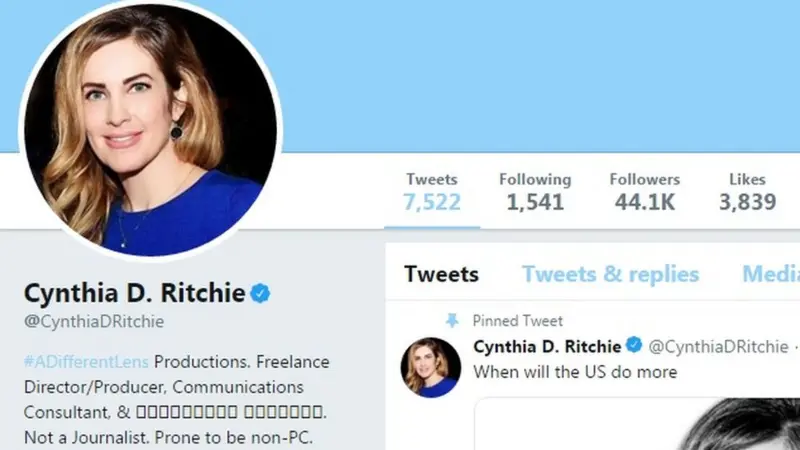
Who is Pakistan's new 'white fan' Cynthia Ritchie?

  • 0
  1. Ali1234 Researcher
    Added an answer on July 23, 2025 at 12:51 am

    Cynthia D. Ritchie is an American filmmaker, analyst, and social media campaigner who has been living in Pakistan since 2010. She is known for her activities on social media to uplift the image of Pakistan and has also been involved in various controversies. Her background includes: Graduating fromRead more

    Cynthia D. Ritchie is an American filmmaker, analyst, and social media campaigner who has been living in Pakistan since 2010. She is known for her activities on social media to uplift the image of Pakistan and has also been involved in various controversies.

    Her background includes:

    • Graduating from Louisiana State University with a Master’s degree in education.
    • Additional graduate-level training at the University of Houston’s School of Law, Pepperdine University, and George Washington University in mass communication, criminal justice, conflict resolution, clinical, and behavioral studies.

    In Pakistan, she has engaged in various activities:

    • Promoting Tourism: Since about 2015, she actively promoted tourism to Pakistan through broadcast and social media.
    • Filmmaking and Analysis: She describes herself as an “American freelance director, producer, and writer.” She has been involved in film projects in collaboration with Inter-Services Public Relations (ISPR), the media wing of Pakistan’s armed forces, and the Khyber Pakhtunkhwa government.
    • Research and Analysis: Between 2016–2020, she researched and analyzed topics related to the Afghan-Pakistan Tribal region, fifth-generation warfare, Kashmir conflicts, and Pakistan–India relations. She has also attended policing and security conferences about Pakistan and regional conflicts.
    • Work in Health Sector: She worked to improve communications in Pakistan’s health sector and also worked for institutions owned or managed by US-based Pakistani doctors. In 2011, she worked for the Khyber Pakhtunkhwa province’s health ministry, which collected samples from Abbottabad.
    • Social Media Campaigning: She is known for her social media presence and has gained a large following. Her content often focuses on the culture and people of Pakistan.

    Cynthia Ritchie has been at the center of several controversies in Pakistan. These include:

    • Allegations of sexual misconduct: In June 2020, she accused former Interior Minister Rehman Malik of rape and former Prime Minister Yousaf Raza Gilani, and another politician, of sexual misconduct, dating back to 2011. These politicians have denied the allegations.
    • Comments about Benazir Bhutto: She also made comments on social media regarding late former Prime Minister Benazir Bhutto, which led to outrage and legal complaints from the Pakistan People’s Party (PPP).
    • Claims of affiliation with military: She has claimed to be working with the military and security services to investigate “anti-state” links, though no formal confirmation or denial has been issued by the military.
    • Questions about her presence and activities: Her continued presence and access to certain areas in Pakistan, given her activities, have raised questions among some observers.
    See less
    • 0
    • Share
      Share
      • Share onFacebook
      • Share on Twitter
      • Share on LinkedIn
      • Share on WhatsApp
  • 1 Answer
Answer

Sidebar

[the_ad_group id="2732"]

[the_ad id="17089"]

Explore

  • Nuq4 Shop
  • Become a Member

Footer

Get answers to all your questions, big or small, on Nuq4.com. Our database is constantly growing, so you can always find the information you need.

Download Android App

© Copyright 2024, Nuq4.com

Legal

Terms and Conditions
Privacy Policy
Cookie Policy
DMCA Policy
Payment Rules
Refund Policy
Nuq4 Giveaway Terms and Conditions

Contact

Contact Us
Chat on Telegram
We use cookies to ensure that we give you the best experience on our website. If you continue to use this site we will assume that you are happy with it.