Sign In Sign In

Continue with Google
or use

Forgot Password?

Don't have account, Sign Up Here

Forgot Password Forgot Password

Lost your password? Please enter your email address. You will receive a link and will create a new password via email.

Have an account? Sign In Now

Sorry, you do not have permission to ask a question, You must login to ask a question.

Continue with Google
or use

Forgot Password?

Need An Account, Sign Up Here

Please briefly explain why you feel this question should be reported.

Please briefly explain why you feel this answer should be reported.

Please briefly explain why you feel this user should be reported.

Sign InSign Up

Nuq4

Nuq4 Logo Nuq4 Logo
Search
Ask A Question

Mobile menu

Close
Ask a Question
  • Nuq4 Shop
  • Become a Member
  • Recent Questions
  • Most Answered
  • No Answers
  • Most Visited
  • Most Voted

Nuq4 Latest Questions

  • 0
Ali1234Researcher
In: Iran, Israel

Third day of Iran-Israel tensions, what do we know about it so far?

  • 0
  1. Ali1234 Researcher
    Added an answer on June 15, 2025 at 6:38 am

    As of Sunday, June 15, 2025, the tensions between Iran and Israel have escalated significantly, marking the third day of overt conflict. Here's a summary of what we know: Initiation of Conflict: * Friday, June 13, 2025: Israel launched major airstrikes on Iran, codenamed "Operation Rising Lion." TheRead more

    As of Sunday, June 15, 2025, the tensions between Iran and Israel have escalated significantly, marking the third day of overt conflict. Here’s a summary of what we know:
    Initiation of Conflict:
    * Friday, June 13, 2025: Israel launched major airstrikes on Iran, codenamed “Operation Rising Lion.” These attacks targeted Iran’s nuclear facilities, military installations, and reportedly killed several top Iranian military leaders and nuclear scientists, including IRGC commander Hossein Salami and Major General Mohammad Bagheri. Explosions were reported in Tehran and near nuclear sites like Natanz and Esfahan. Israel stated its aim was to “degrade, destroy, and remove the threat” of Iran’s nuclear weapons program.
    * Friday, June 13, 2025 (Evening): Iran quickly retaliated with a large-scale attack on Israel, launching over 150 ballistic missiles and more than 100 drones, codenamed “Operation True Promise III.”
    Escalation and Continued Strikes:
    * Saturday, June 14, 2025: Both sides continued their strikes. Israel expanded its targets to include Iran’s energy industry, while Iranian missile and drone attacks on Israel continued, reportedly hitting cities like Haifa and Tel Aviv.
    * Sunday, June 15, 2025: The exchange of strikes has continued for a third day. Israel has unleashed further airstrikes across Iran, threatening greater force. Some Iranian missiles have reportedly evaded Israeli air defenses and struck buildings in central Israel. Iran’s Revolutionary Guard Corps (IRGC) claimed to have targeted Israel’s fuel infrastructure in response to Israeli strikes on its oil facilities.
    Casualties and Damages:
    * Iran: Iranian media has reported significant casualties, with unofficial tolls on Saturday stating 78 people killed and 329 injured in Tehran alone. Al Jazeera reports at least 80 people killed and 800 wounded across Iran over the past two days, including 20 children and nine nuclear scientists. Israeli strikes have caused fires at oil storage facilities in Tehran and other areas.
    * Israel: Iran’s retaliatory strikes have also caused casualties. Israel’s Magen David Adom rescue service reported at least 10 people killed overnight and into Sunday, bringing Israel’s total death toll to 13. Reports indicate strikes hitting residential areas, with one attack in Bat Yam (a Tel Aviv suburb) killing at least six people, including two children, and wounding 180.
    International Reaction:
    * The United Nations Security Council held a meeting on Friday, June 13, to discuss the rising tensions.
    * Calls for de-escalation are mounting from world leaders.
    * The conflict has closed Israel’s main international airport and airspace for a third day.
    Context and Broader Implications:
    * This direct military confrontation marks a significant escalation in the long-standing “shadow war” between Israel and Iran, which previously involved proxy conflicts, cyberattacks, and targeted assassinations.
    * The immediate catalyst was Israel’s initial strikes, which it justified by claiming Iran was close to developing a nuclear weapon, a day after the UN nuclear watchdog declared Iran wasn’t complying with nonproliferation agreements. Iran responded by stating it would create a new uranium enrichment facility.
    * Experts are concerned about the potential for this conflict to escalate into a wider regional war, with implications for global energy markets.
    * There are reports of discussions regarding regime change as a potential Israeli goal.

    See less
    • 0
    • Share
      Share
      • Share onFacebook
      • Share on Twitter
      • Share on LinkedIn
      • Share on WhatsApp
  • 1 Answer
Answer
  • 0
Ali1234Researcher
In: India, Pakistan

Despite its efforts, why was India unable to stop the IMF from releasing a loan tranche for Pakistan?

  • 0
  1. Ali1234 Researcher
    Added an answer on July 8, 2025 at 8:00 am

    India has consistently raised strong objections to the International Monetary Fund (IMF) releasing loan tranches to Pakistan, primarily due to concerns that these funds could be misused to finance cross-border terrorism and Pakistan's poor track record of adhering to IMF program conditions. However,Read more

    India has consistently raised strong objections to the International Monetary Fund (IMF) releasing loan tranches to Pakistan, primarily due to concerns that these funds could be misused to finance cross-border terrorism and Pakistan’s poor track record of adhering to IMF program conditions. However, despite these efforts, India has been largely unsuccessful in stopping the loans for several key reasons:
    * IMF’s Decision-Making Structure: The IMF’s executive board, which approves loans, operates on a system of weighted voting based on a country’s economic size. While India is a significant member, it does not possess a veto power like in the UN Security Council. Furthermore, IMF rules typically do not allow for a formal “no” vote. Instead, members can either vote in favor or abstain. India has chosen to abstain in such votes, which formally registers its dissent and objections, but it cannot outright block a loan if other major members support it.
    * Focus on Economic Stability: The IMF’s primary mandate is to ensure global financial stability. When a member country like Pakistan faces severe balance of payments issues, the IMF views providing financial assistance as crucial to preventing a wider economic collapse, which could have regional and even global repercussions. The IMF’s justification for the loans often centers on Pakistan meeting its technical targets and making progress on reforms, as assessed by its staff.
    * “Too Big to Fail” Borrower: India has highlighted that Pakistan’s prolonged borrowing from the IMF has created a “too big to fail” situation. This means that Pakistan’s debt burden is so high that allowing it to default could destabilize the global financial system, making the IMF more inclined to continue providing assistance to prevent such an outcome.
    * Political vs. Procedural Considerations: While India’s concerns about the misuse of funds for terrorism are taken note of by the IMF, the institution’s decisions are largely governed by procedural and technical formalities related to economic stability and a country’s adherence to program conditions. The IMF attempts to maintain neutrality on political matters, focusing on the economic health of its member states.
    * Lack of Broad International Support for a Blockade: While some member countries might share India’s concerns about Pakistan’s track record, there hasn’t been a strong enough consensus among major IMF shareholders to outright block loans to Pakistan. Many countries prioritize regional stability and a functioning Pakistani economy over India’s specific security concerns within the IMF’s framework.
    * Pakistan’s Efforts to Meet Conditions: Pakistan, despite its challenges, often makes efforts to meet the technical conditions set by the IMF for loan disbursements, which helps it secure the tranches.
    In essence, while India has effectively used its position to voice strong objections and raise awareness about its concerns regarding Pakistan’s use of funds and its track record, the institutional framework and mandate of the IMF, coupled with the complex geopolitical dynamics, make it very difficult for any single country, even a significant one like India, to unilaterally stop a loan to another member nation.

    See less
    • 0
    • Share
      Share
      • Share onFacebook
      • Share on Twitter
      • Share on LinkedIn
      • Share on WhatsApp
  • 1 Answer
Answer
  • 0
Ali1234Researcher
In: India

Air India plane crash: ‘Boeing’s fuel control switches are safe to use,’ FAA says

  • 0
  1. Ali1234 Researcher
    Added an answer on July 23, 2025 at 11:51 pm

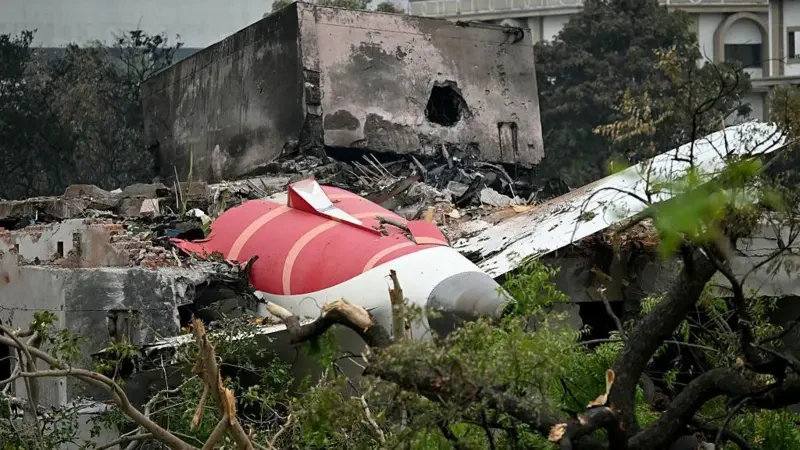
    Following the Air India Flight 171 crash on June 12, 2025, the U.S. Federal Aviation Administration (FAA) and Boeing have privately affirmed the safety of fuel cutoff switch locks on Boeing aircraft. This comes amidst an ongoing investigation into the crash, which a preliminary report indicated wasRead more

    Following the Air India Flight 171 crash on June 12, 2025, the U.S. Federal Aviation Administration (FAA) and Boeing have privately affirmed the safety of fuel cutoff switch locks on Boeing aircraft. This comes amidst an ongoing investigation into the crash, which a preliminary report indicated was caused by both engine fuel switches flipping to “cutoff” shortly after takeoff.

    While India’s Aircraft Accident Investigation Bureau (AAIB) preliminary report referenced a 2018 FAA advisory about potential disengagement of the fuel control switch locking mechanism, the FAA has stated that it does not consider this issue an “unsafe condition” requiring an airworthiness directive. Boeing has also reiterated the FAA’s stance in messages to airlines, and has not recommended any additional action in response to the incident.

    Despite the FAA’s position, India’s Directorate General of Civil Aviation (DGCA) ordered airlines operating Boeing 787 Dreamliners and select Boeing 737 variants to inspect fuel control switches. Air India has since completed these precautionary inspections on all its Boeing 787 and 737 aircraft, including those of Air India Express, and reported finding no issues with the locking mechanisms.

    The investigation into the Air India Flight 171 crash is ongoing, with the AAIB’s preliminary report outlining initial findings but not assigning blame. Cockpit voice recordings reportedly captured a moment of confusion between the pilots, with one asking the other why the fuel was cut off, and the other denying having done so. This has led to speculation about pilot error, though pilot associations and the NTSB have cautioned against premature conclusions, emphasizing that full investigations take time to determine root causes. 

    See less
    • 0
    • Share
      Share
      • Share onFacebook
      • Share on Twitter
      • Share on LinkedIn
      • Share on WhatsApp
  • 1 Answer
Answer
  • 0
Ali1234Researcher
In: India

India Severe heat wave alert issued in the country, from when to when?

  • 0
  1. Ali1234 Researcher
    Added an answer on June 9, 2025 at 5:37 am

    India is experiencing a severe heat wave, with alerts issued for various regions. According to the India Meteorological Department (IMD) and other reports: * Ongoing Heatwave: The 2025 India-Pakistan heat wave began in early April 2025 and is ongoing. * Current Forecast (June 2025): * **North and CeRead more

    India is experiencing a severe heat wave, with alerts issued for various regions. According to the India Meteorological Department (IMD) and other reports:
    * Ongoing Heatwave: The 2025 India-Pakistan heat wave began in early April 2025 and is ongoing.
    * Current Forecast (June 2025):
    * **North and Central India (including Delhi, Haryana, Punjab): Heatwave conditions are likely to continue until at least June 11-12, 2025.
    * West Rajasthan: Severe heatwave conditions are expected to persist between June 8 and June 11, 2025, with peak intensity on June 9.
    * Uttar Pradesh: Affected from June 9 to June 11, 2025.
    * **Jammu-Kashmir, Ladakh, Gilgit-Baltistan, Muzaffarabad, and Madhya Pradesh: Heatwave conditions are expected to persist until June 11, 2025.
    * **Coastal Andhra Pradesh & Yanam, Odisha, Tamil Nadu, Puducherry & Karaikal, Gangetic West Bengal, Bihar: Hot and humid weather is forecast for early June.
    * Long-term Outlook: The IMD had previously warned that temperatures would be higher than normal from April to June 2025, and the heatwave is expected to last for more than four months, from early April to late July, with the hottest months likely being April and May.
    Relief from the heat is expected in some regions, with potential for light to moderate rainfall in Haryana, Punjab, Chandigarh, and Uttar Pradesh around June 13-14, and isolated heavy rainfall in Uttarakhand from June 12-14.

    See less
    • 0
    • Share
      Share
      • Share onFacebook
      • Share on Twitter
      • Share on LinkedIn
      • Share on WhatsApp
  • 1 Answer
Answer
  • 0
Ali1234Researcher
In: China

Fact Check: Has China really introduced 10G internet service?

  • 0
  1. Ali1234 Researcher
    Added an answer on June 20, 2025 at 12:35 pm

    Yes, it's true that China has introduced 10G internet service. In April 2025, China launched its first commercial 10-Gigabit (10G) broadband network in Sunan County, Hebei Province, and also in Xiong'an New Area. This was a collaborative effort between Huawei and China Unicom. Here are some key factRead more

    Yes, it’s true that China has introduced 10G internet service.

    In April 2025, China launched its first commercial 10-Gigabit (10G) broadband network in Sunan County, Hebei Province, and also in Xiong’an New Area. This was a collaborative effort between Huawei and China Unicom.

    Here are some key facts about this development:

    • Speed: The network aims to deliver download speeds of up to 9,834 Mbps (nearly 10 Gbps) and upload speeds of around 1,008 Mbps, with a very low latency of just 3 milliseconds.
    • Technology: It’s powered by 50G Passive Optical Network (PON) technology, which significantly enhances data transmission over existing fiber-optic infrastructure. This means it’s a fixed-line broadband service, not a mobile network like 5G.
    • Impact: This level of speed is expected to support advanced applications like 8K video streaming, virtual and augmented reality (VR/AR), cloud computing, telemedicine, remote education, and smart city initiatives. For example, a 20GB 4K movie could be downloaded in under 20 seconds.
    • Global Position: This launch positions China at the forefront of global broadband technology, surpassing many other countries in commercially available top speeds.

    While it’s currently available in specific areas, it marks a significant step forward in internet infrastructure and demonstrates China’s push in next-generation connectivity.

    See less
    • 0
    • Share
      Share
      • Share onFacebook
      • Share on Twitter
      • Share on LinkedIn
      • Share on WhatsApp
  • 1 Answer
Answer
  • 0
Ali1234Researcher
In: Grand Mosque, Saudi Arabia

Military helicopters over the Grand Mosque and the 'mission to protect God's guests': Why did Saudi Arabia install a defensive missile system in Mecca?

  • 0
  1. Ali1234 Researcher
    Added an answer on July 16, 2025 at 3:12 am

    Saudi Arabia's decision to deploy defensive missile systems, such as the U.S.-made Patriot missile systems, around Mecca, particularly during the Hajj pilgrimage, is driven by a critical need to protect its holy sites and the millions of pilgrims who visit them annually from external threats. Here'sRead more

    Saudi Arabia’s decision to deploy defensive missile systems, such as the U.S.-made Patriot missile systems, around Mecca, particularly during the Hajj pilgrimage, is driven by a critical need to protect its holy sites and the millions of pilgrims who visit them annually from external threats.

    Here’s a breakdown of the reasons:

    1. Houthi Missile and Drone Threats:
      • Since 2015, Saudi Arabia has been engaged in a conflict with the Houthi rebels in Yemen. The Houthis, backed by Iran, have repeatedly launched ballistic missiles and drones towards Saudi territory, including critical infrastructure, airports, and even holy cities.
      • There have been multiple documented instances of Houthi missiles being intercepted by Saudi air defenses near Mecca, Taif (a city close to Mecca), and Jeddah. While the Houthis often claim to be targeting military installations, Saudi Arabia asserts that these attacks are aimed at disrupting the Hajj and causing casualties, including among pilgrims.
      • The deployment of missile systems is a direct response to these tangible and ongoing threats from Yemen, demonstrating Saudi Arabia’s commitment to defending its sovereignty and the safety of those within its borders.
    2. “Mission to Protect God’s Guests”:
      • Saudi Arabia considers itself the “Custodian of the Two Holy Mosques” (Mecca and Medina) and views the protection of pilgrims as a paramount religious and national duty.
      • The Hajj pilgrimage brings millions of Muslims from around the world to Mecca, creating a massive gathering that could be a vulnerable target. Ensuring the safety and security of these “Guests of the Merciful” is a non-negotiable priority for the Saudi government.
      • The deployment of advanced air defense systems is part of a multi-layered security strategy that includes aerial surveillance by military helicopters, ground forces, and strict Hajj permit regulations, all aimed at creating a secure environment for pilgrims.
    3. Regional Tensions and Deterrence:
      • The broader geopolitical landscape in the Middle East, with ongoing conflicts (like in Gaza) and heightened regional tensions, contributes to Saudi Arabia’s proactive defense posture.
      • Deploying visible and effective missile defense systems serves as a deterrent to any potential aggressors, signaling that Saudi Arabia is prepared to defend its most sacred sites and its people. It sends a clear message that attacks on these areas will not be tolerated.
    4. Technological Preparedness:
      • The Patriot missile system is an advanced, U.S.-made weapon designed to counter ballistic missiles, cruise missiles, and drones. Its deployment signifies Saudi Arabia’s reliance on cutting-edge defense technology to protect its airspace. Saudi Arabia has also acquired other advanced systems like THAAD for longer-range defense.

    In essence, the installation of defensive missile systems in Mecca is a necessary and strategic measure driven by credible threats, a deep sense of religious duty to protect pilgrims, and the broader aim of ensuring national security and stability in a volatile region.

    See less
    • 0
    • Share
      Share
      • Share onFacebook
      • Share on Twitter
      • Share on LinkedIn
      • Share on WhatsApp
  • 1 Answer
Answer
  • 0
Henry
In: France

What are the elections in France?

  • 0
  1. Iqra Saleem
    Added an answer on November 21, 2023 at 9:02 pm

    France conducts various elections, reflecting its democratic process. Key elections include: Presidential Elections: The President is elected every five years through a two-round system. Parliamentary Elections: National Assembly members are elected, determining the legislative branch's composition.Read more

    France conducts various elections, reflecting its democratic process. Key elections include:

    1. Presidential Elections: The President is elected every five years through a two-round system.
    2. Parliamentary Elections: National Assembly members are elected, determining the legislative branch’s composition.
    3. Municipal Elections: Local officials, including mayors and municipal councils, are elected in cities and towns.
    4. European Parliament Elections: France participates in the election of representatives to the European Parliament.
    5. Senate Elections: Members of the Senate, the upper house of the French Parliament, are indirectly elected.
    6. Regional and Departmental Elections: Regional and departmental councils are elected, addressing local and regional issues.
    7. Canton Elections: Voters elect representatives for cantonal councils, administrative divisions within departments.

    These elections shape France’s political landscape at various levels, fostering democratic representation.

    See less
    • 0
    • Share
      Share
      • Share onFacebook
      • Share on Twitter
      • Share on LinkedIn
      • Share on WhatsApp
  • 1 Answer
Answer
  • 0
Ali1234Researcher
In: India, oil

Where does India buy oil from?

  • 0
  1. Ali1234 Researcher
    Added an answer on July 21, 2025 at 1:40 am

    India, being the world's third-largest oil consumer and heavily reliant on imports (over 85% of its crude oil needs), diversifies its sources to ensure energy security and get the best prices. While the specific proportions can fluctuate monthly due to market dynamics, geopolitical events, and priciRead more

    India, being the world’s third-largest oil consumer and heavily reliant on imports (over 85% of its crude oil needs), diversifies its sources to ensure energy security and get the best prices.

    While the specific proportions can fluctuate monthly due to market dynamics, geopolitical events, and pricing, India’s main oil suppliers generally include:

    1. Russia: Since the Ukraine crisis, Russia has emerged as India’s single largest crude oil supplier, offering significant discounts. Its share has jumped dramatically from less than 2% before the conflict to often over 35% of India’s total imports.
    2. Iraq: Historically, Iraq has been one of India’s top suppliers for many years, providing a steady flow of crude.
    3. Saudi Arabia: Another traditional major supplier from the Middle East, Saudi Arabia remains a significant source for India, although its share can fluctuate based on pricing and OPEC+ decisions.
    4. United Arab Emirates (UAE): The UAE is also a consistent and important crude oil supplier to India, providing a variety of grades.
    5. United States: The US has become an increasingly important supplier to India in recent years as India diversifies away from its traditional Middle Eastern sources and seeks various crude grades.

    Beyond these top players, India also imports oil from a range of other countries to further diversify its supply, including:

    • Nigeria
    • Brazil
    • Canada
    • Kuwait
    • Angola
    • And others as market conditions and pricing opportunities arise.

    India’s strategy is to avoid over-reliance on any single region or country, ensuring it has options if one supply source is disrupted or becomes uneconomical.

    See less
    • 0
    • Share
      Share
      • Share onFacebook
      • Share on Twitter
      • Share on LinkedIn
      • Share on WhatsApp
  • 1 Answer
Answer
  • 0
Ali1234Researcher
In: India, Pakistan

Is the India-Pakistan Simla Agreement going to end?

  • 0
  1. Ali1234 Researcher
    Added an answer on June 5, 2025 at 1:21 pm

    While Pakistan's Defence Minister Khawaja Asif recently stated that the 1972 Simla Agreement has lost its "sanctity" and is a "dead document" due to India's "unilateral actions," Pakistan's Foreign Ministry has clarified that no formal decision has been taken to scrap any bilateral agreements with IRead more

    While Pakistan’s Defence Minister Khawaja Asif recently stated that the 1972 Simla Agreement has lost its “sanctity” and is a “dead document” due to India’s “unilateral actions,” Pakistan’s Foreign Ministry has clarified that no formal decision has been taken to scrap any bilateral agreements with India, including the Simla Agreement.
    Therefore, as of now, the Simla Agreement is still officially in effect. However, the comments from the Defense Minister highlight the ongoing tensions between the two countries and Pakistan’s perception that the agreement’s relevance has diminished due to recent events.
    The Simla Agreement, signed after the 1971 Indo-Pak war, aims to resolve disputes between India and Pakistan bilaterally and peacefully.

    See less
    • 0
    • Share
      Share
      • Share onFacebook
      • Share on Twitter
      • Share on LinkedIn
      • Share on WhatsApp
  • 1 Answer
Answer
  • 0
Ali1234Researcher
In: India

How will the Air India plane crash investigation be conducted?

  • 0
  1. Ali1234 Researcher
    Added an answer on July 23, 2025 at 11:57 pm

    The investigation into the Air India plane crash will be conducted primarily by the Aircraft Accident Investigation Bureau (AAIB) of India, which is the designated authority for such investigations in the country. The AAIB operates under the Aircraft (Investigation of Accidents and Incidents) Rules,Read more

    The investigation into the Air India plane crash will be conducted primarily by the Aircraft Accident Investigation Bureau (AAIB) of India, which is the designated authority for such investigations in the country. The AAIB operates under the Aircraft (Investigation of Accidents and Incidents) Rules, 2017, and is an independent body under the Ministry of Civil Aviation.

    Here’s a breakdown of how the investigation is typically conducted:

    1. Objective: The sole objective of the investigation is prevention of future accidents and incidents, not to apportion blame or liability. Any investigation by the AAIB is separate from judicial or administrative proceedings.
    2. Multidisciplinary Team: The AAIB forms a multidisciplinary team for the investigation. This team often includes:
      • An Investigator-in-Charge.
      • Aviation medicine specialists.
      • Air Traffic Control (ATC) officers.
      • Representatives from the State of Design (e.g., the US National Transportation Safety Board – NTSB, since the aircraft was a Boeing Dreamliner) and the State of Manufacture (USA), as well as the State of Registry and State of the Operator.
    3. Site Investigation and Evidence Collection:
      • Investigators immediately go to the crash site to collect and preserve perishable evidence, wreckage samples, and the crucial black boxes (Flight Data Recorder – FDR and Cockpit Voice Recorder – CVR).
      • In the case of the recent Air India crash, India successfully decoded the black boxes domestically for the first time.
      • They collect data from various sources, including the airline operator, regulatory bodies, and involved personnel.
      • Investigators also look at CCTV footage from the surrounding area and interview witnesses.
    4. Black Box Analysis:
      • The FDR records hundreds of parameters about the aircraft’s performance (altitude, airspeed, engine parameters, control surface positions, etc.).
      • The CVR records cockpit conversations and other sounds within the cockpit.
      • The data from these black boxes is meticulously analyzed to reconstruct the sequence of events leading to the accident.
    5. Expert Analysis: The AAIB may engage domain experts and collaborate with other agencies, such as Hindustan Aeronautics Limited and DGCA laboratories, for specialized analysis. This can include:
      • Analysis of aircraft remnants.
      • Post-mortem reports.
      • Component inspections.
      • Review of maintenance records.
      • Assessment of pilot training and health, including psychological aspects.
    6. Preliminary Report: For major accidents, countries are encouraged by ICAO (International Civil Aviation Organization) to publish a preliminary report within 30 days. This report provides initial findings but does not typically reach definitive conclusions about the cause. The AAIB for this Air India crash released its preliminary report on July 12, indicating that the fuel cutoff switches had been activated shortly after takeoff.
    7. Final Report: The investigation is a complex process and takes time. The final report aims to establish the root cause(s) of the accident and suggest corrective measures to prevent similar occurrences. ICAO guidance suggests a goal of releasing the final report within 12 months.
    8. Safety Recommendations: Based on their findings, the AAIB issues safety recommendations to relevant bodies, such as the Directorate General of Civil Aviation (DGCA) in India or international aviation regulatory bodies, for implementation and monitoring.

    It’s important to note that throughout the process, the AAIB aims for transparency and impartiality, although there can be external pressures and differing interpretations of preliminary findings, as seen with some media reports and statements from pilot associations regarding the recent Air India crash. 

    See less
    • 0
    • Share
      Share
      • Share onFacebook
      • Share on Twitter
      • Share on LinkedIn
      • Share on WhatsApp
  • 1 Answer
Answer

Sidebar

[the_ad_group id="2732"]

[the_ad id="17089"]

Explore

  • Nuq4 Shop
  • Become a Member

Footer

Get answers to all your questions, big or small, on Nuq4.com. Our database is constantly growing, so you can always find the information you need.

Download Android App

© Copyright 2024, Nuq4.com

Legal

Terms and Conditions
Privacy Policy
Cookie Policy
DMCA Policy
Payment Rules
Refund Policy
Nuq4 Giveaway Terms and Conditions

Contact

Contact Us
Chat on Telegram
We use cookies to ensure that we give you the best experience on our website. If you continue to use this site we will assume that you are happy with it.